Keyword research: Plan website pages around search intent
· PoolByte Technology
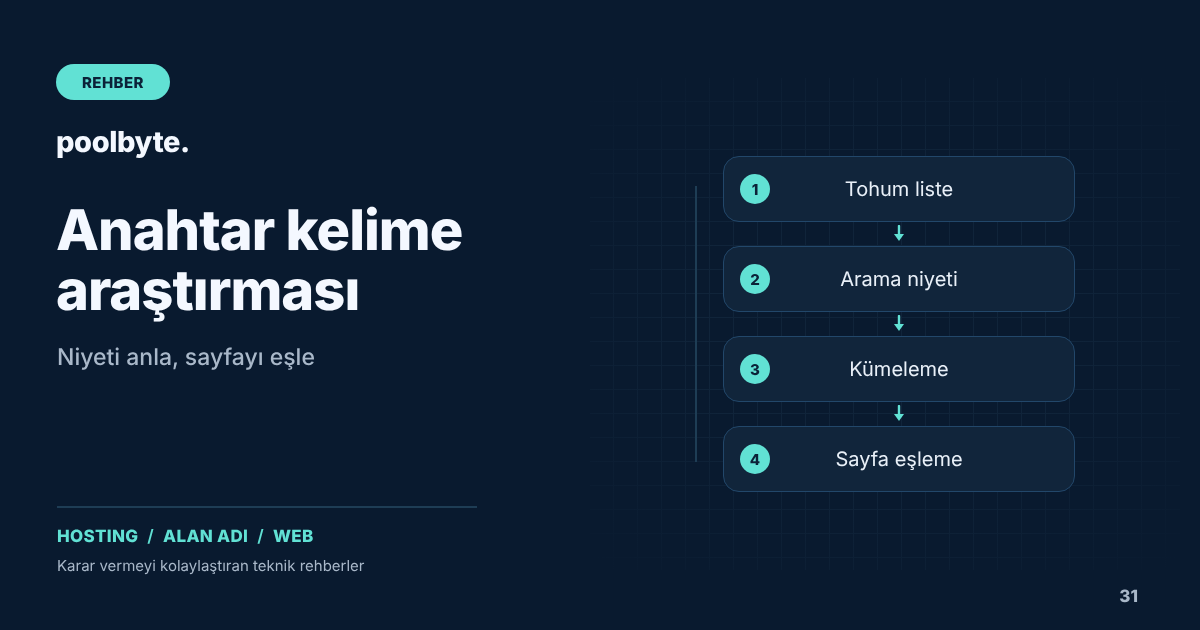
Keyword research is not done to cram as many words as possible onto a page, but to understand how people search for a need. Someone who asks "Web hosting" and someone who asks "Which is the fastest hosting for WordPress" are at different stages and expect different pages. Seeing this difference allows you to both produce the right content and prevent your existing pages from interfering with each other.
In this article, we describe a tool-independent keyword research method that a small and medium-sized business can apply.
Extract the seed list from the client's language
Start keyword research not by typing words into a tool, but by collecting the language the customer uses. Repetitive phrases in sales calls, support requests, and quote forms are the most valuable resource. Customers use words that describe their problems, not your technical terms.
Then look at your existing data. Search Console shows you which queries your site already appears for; You may not have a really good page yet for some of these queries. We explained how to read the report in our Search Console performance analysis guide. Autocomplete suggestions in the search box and the "Other users also asked" section on the results page also expand the list.
Classify search intent
Determine the intention behind each statement. In practice, four main groups will do the trick:
- Information seeking: Learning-oriented questions such as "What is DNS propagation", "How to set up SSL".
- Comparison: Pre-decision searches such as "shared hosting or VPS", "best e-commerce infrastructure".
- Action: Searches that are close to purchasing, such as "web hosting prices", "buy a domain name".
- Local or brand search: searches that include business name or location, such as "Istanbul web design".
Instead of guessing intent, look at the search results. If guide posts always appear first for a phrase, it is difficult to move a product page to the top with the same phrase. The results page shows how Google interprets what users expect for that search.
Interpret volume and competition data accurately
Keyword Planner in Google Ads provides approximate search volume ranges and new ideas for phrases. Read these figures as orders of magnitude, not exact values. A phrase with a few hundred monthly searches but high purchase intent can bring in more customers than a generic term with thousands of searches.
Also note seasonality. Some searches increase significantly at times such as campaign periods, school openings or the end of the year; It is necessary to prepare the content before these periods.
Cluster phrases and match them to pages
Collect statements that describe the same need in different words as a cluster. "Domain name registration", "domain acquisition" and "how to buy a domain name" can most likely be answered on the same page. Assign a single target page to each cluster.
This matching avoids the problem called cannibalization: when you have two very similar pages for the same intent, the search engine has a hard time deciding which one to display and they may both be weak. If you detect two similar pages, merge them and redirect the old address to the new page; You can find the steps in our 301 redirect guide.
Let the matching table contain the following information for each row: main phrase, related phrases, intent, target page, and the status of the page (current, to be updated, or to be written).
Convert the set to a content plan
Prepare a brief content summary for each page to be written. The summary should include the target statement, basic questions asked by the user, information that must be included on the page, other pages to be linked to, and the user's next step. You can take a look at our internal linking guide to establish the link structure between pages.
Use the word naturally in the text; Instead of aiming for a certain intensity, focus on explaining the topic completely. Write the title tag and meta description according to this goal as well; Details are in our title and meta description guide.
Measure and update
Keyword research is not a one-time job. Track which queries the target page appears in in the weeks after publication. If you are getting impressions for unexpected but relevant queries, you can strengthen the content by adding these questions to the page. If there are impressions but few clicks, the problem is usually in the title and description of the search results.
Frequently asked questions
Why are long-tail expressions important?
While longer and more specific phrases may individually have lower volume, they generally show clearer intent and have less competition. A comprehensive page that covers many long phrases can bring in significant traffic overall.
How many times should I use the keyword in the text?
There is no specific number. When you explain the subject naturally, the main expression and its synonyms appear automatically. Forcibly repeating the same word spoils readability and does not benefit the user.